Supermarket racks do far more than hold products. They shape how customers move through your store, where their eyes land, and which items they pick up without planning to. According to POPAI's Shopper Engagement Study, 76% of supermarket purchase decisions are made in-store — meaning your physical layout, including your rack choices, is actively shaping sales outcomes.
This guide covers all 20 types of supermarket racks: what each one is built for, where it belongs in your store, and how to choose the right combination.
Key Takeaways
- Supermarket racks are purpose-built shelving systems covering 20 distinct types across five functional zones
- Types range from gondola and wall racks to refrigerated displays, pegboard panels, and back-store storage systems
- Each type is engineered for a specific product category, store zone, or merchandising objective
- The right rack combination directly affects space utilisation, product visibility, and sales performance
- Selection decisions should account for product type, traffic flow, and load-bearing requirements
What Are Supermarket Racks?
Supermarket racks are purpose-built shelving and display systems used across grocery stores, hypermarkets, and retail outlets to organise products, maximise floor space, and guide the shopping experience. They are retail infrastructure, not decorative furniture.
"Supermarket rack" is an umbrella term covering a broad ecosystem of fixtures. An open steel gondola in the centre aisle, a refrigerated case for dairy, a pegboard panel for snack packets, a dump bin near the entrance, and a pallet rack in the stockroom — all qualify. They just serve entirely different operational functions.
The 20 types below cover that full range, from front-of-store display fixtures to back-of-house storage systems.
Why Does Rack Type Matter in Retail?
The wrong rack type creates tangible problems. Products that are hard to find reduce dwell time. Racks that don't suit the product category cause poor presentation and safety issues. Inefficient floor use limits how many SKUs your store can carry.
The right rack, placed correctly, does the opposite. A 2021 study published in PLOS Medicine found that moving produce displays to store entrances and removing confectionery from checkout and end-of-aisle positions increased fruit and vegetable sales by roughly 9,820 portions per store per week at six months. Rack placement drove that result — not pricing or promotions.
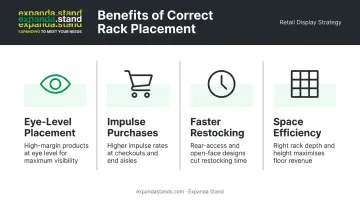
Placement is one part of the equation. The fixture type itself shapes what shoppers see, how quickly staff can restock, and how efficiently floor space earns revenue:
- Puts high-margin products at eye level, where shoppers are most likely to notice them
- Increases impulse purchase rates at key decision points like checkouts and end aisles
- Cuts restocking time by making products accessible from the rear or through open-face designs
- Maximises floor space by fitting the right rack depth and height to each product category
The 20 Types of Supermarket Racks
Most well-designed stores use a combination of several rack types. Each is engineered for a specific zone, product weight, display purpose, or shopper interaction.
Aisle and Central Floor Racks
1. Gondola Racks
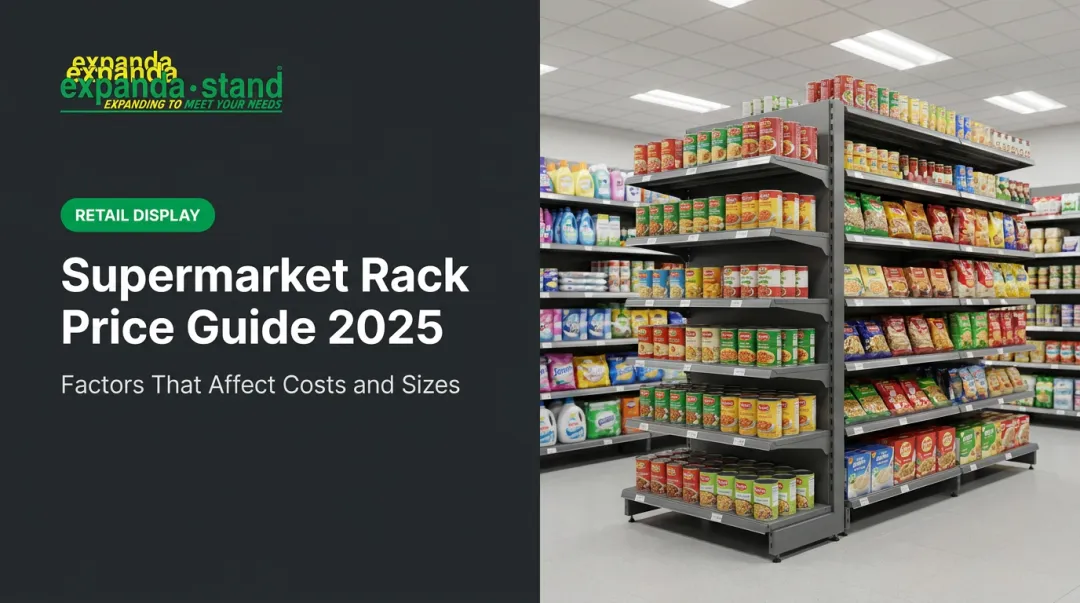
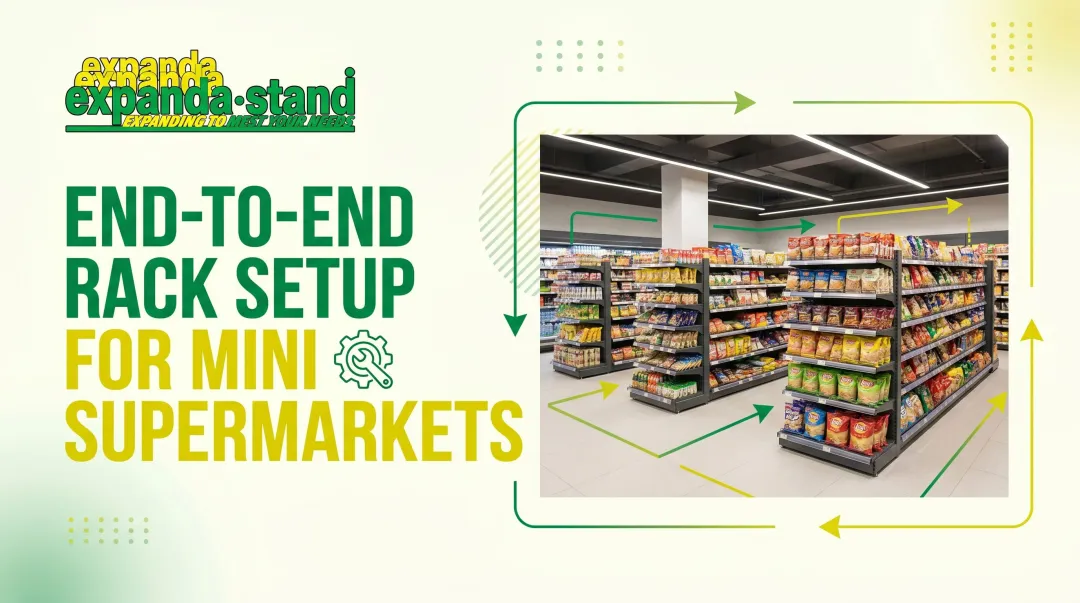
Gondola racks are the primary double-sided, freestanding steel units that form the main shopping lanes in centre aisles. Shelves are fully adjustable and typically available in heights ranging from 48 to 96 inches, with base shelf depths of 16 to 24 inches.
Their double-sided design maximises display capacity per square metre of floor space, making them the most widely used rack type in supermarkets and hypermarkets. Expanda Stand's island/gondola shelving systems use a modular, tool-free assembly design and are Tegometall compatible — meaning they integrate with the international standard accessory ecosystem.
2. End Cap Racks
Single-sided display units positioned at the open ends of gondola aisles. Because they face multiple directions simultaneously, end caps capture the highest footfall of any rack position in the store.
The numbers back this up. A 2018 Journal of Retailing and Consumer Services study found rear end caps generated higher total brand sales uplift than front end caps, with purchase-volume increases of 23.2% for beer, 33.6% for wine, and 46.1% for spirits. These are the prime slots for promotional items, seasonal products, and high-margin lines.
3. Corner Racks
Angled or curved shelving units designed for dead-corner spaces where standard gondola rows cannot extend. They recover otherwise wasted floor area and work well for grouping complementary products — sauces next to pasta, for example.
4. Pillar Racks
Compact display fixtures that wrap around or attach to structural columns inside the store. They convert potential dead zones into active display space without requiring any additional floor area — a practical solution in older buildings with prominent interior columns.
5. Bulk Display Racks
Heavy-duty, open-front fixtures designed to hold large quantities of a single product type. Common applications include fresh produce, packaged grains, and discounted promotional items. The open-access format lets customers pick directly from the display, which typically drives higher units-per-transaction for promotional stock.
Wall and Perimeter Racks
6. Wall Racks (Wall-Mounted Shelving)
Single-sided shelving units fixed along the store's perimeter walls. Typically used for heavier items — beverages, cleaning products, canned goods — they maximise vertical storage without consuming floor area. Often the first shelving customers encounter when entering a product section.
Expanda Stand's wall channel/wall-mounted rack systems feature modular design, Tegometall compatibility, and a wide range of accessories for flexible configuration.
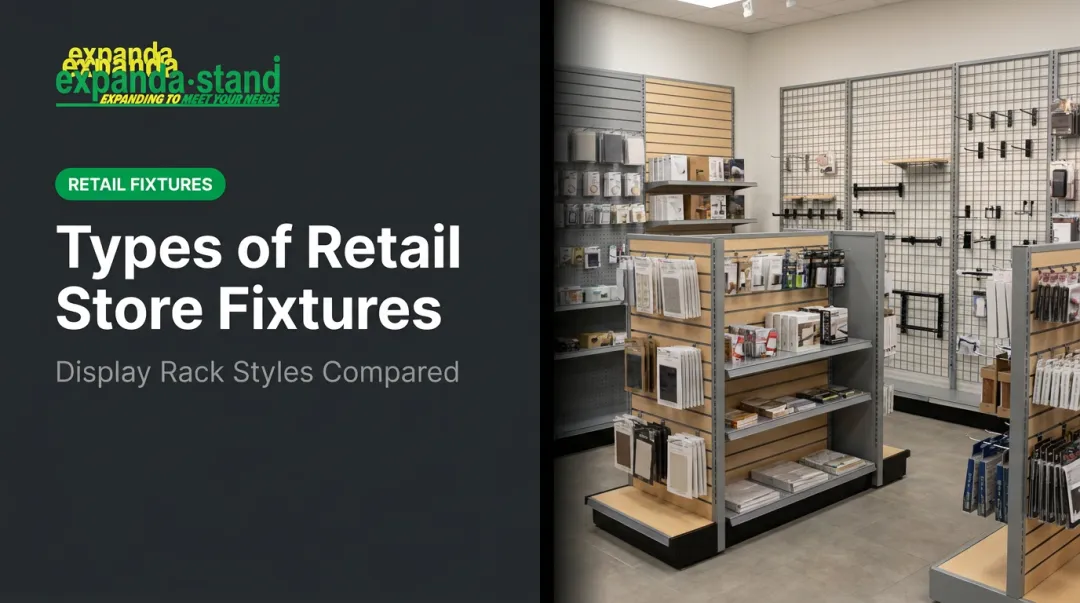
7. Slatwall Display Racks
Panels with horizontal grooves that accept interchangeable accessories — hooks, shelves, brackets, and bins — without tools. Retailers can reconfigure displays quickly as product ranges change, making them well-suited for pharmacies, personal care sections, and small-format stores. Expanda Stand offers slatwall systems with integrated LED lighting and bottom storage compartments.
8. Multi-Tier Shelving
Stacked systems with three or more levels, designed to maximise vertical space. Common along walls or in back-of-store areas where the goal is stocking a greater number of SKUs in a compact footprint. Adjustable tier heights accommodate products of varying sizes.
Product-Specific Display Racks
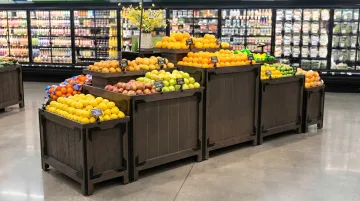
9. Fruit and Vegetable Display Racks
Built with sloped or tiered trays, open-bin designs, or stepped levels to showcase fresh produce attractively. Food-contact surfaces must be safe, corrosion-resistant, nonabsorbent, and easily cleanable — as required under FSSAI food equipment guidelines and equivalent international food safety standards.
Expanda Stand uses durable stainless steel for their F&V racks, with optional wood finish combinations for visual appeal. Stainless steel divider systems allow for hygienic product separation.
10. Refrigerated Display Racks
Integrated shelving-and-cooling units for dairy, frozen foods, cold beverages, and meat. Refrigeration can account for up to 40% of total energy use in a supermarket according to ENERGY STAR — making these the most capital-intensive rack type in any store. Glass door or open-front designs balance product visibility with temperature maintenance. Cold-held foods must be kept at 5°C or below under food safety regulations.
11. Wine and Liquor Racks
Purpose-designed racks with angled shelves or horizontal cradles that hold bottles securely, prevent rolling, and present labels clearly. Typically made from wood or powder-coated steel. Used in dedicated beverage sections or specialty retail areas.
12. Garment and Apparel Racks
Hanging rail systems, four-way display stands, or slatwall-based clothing fixtures used in supermarkets that carry clothing, accessories, or textiles. Allow customers to browse by size or type. Primarily found in hypermarket formats where non-food categories are carried.
Promotional and Impulse Racks
13. Pegboard Racks
Perforated panel displays that use hooks, bins, and accessories to hang lightweight products — snack packets, personal care items, small tools, and accessories. The peg layout changes without replacing the panel, making them highly flexible for impulse-purchase zones and end-of-aisle placements.
Expanda Stand's perforated rack systems use standard 25mm pitch holes and are Tegometall compatible, supporting a broad range of hook and accessory types.
14. Checkout and Impulse Racks
Compact, low-profile shelving installed along checkout lanes to capture last-minute purchases. Front-end candy margins run at 37.1% versus 28.1% in the main candy aisle, according to Progressive Grocer — making these among the highest-revenue-per-square-metre fixtures in any store. Typical products: confectionery, batteries, travel-size items, and loyalty cards.
Expanda Stand manufactures side kick/power wing display units designed specifically for checkout and promotional placements.
15. Dump Bin Racks
Large open-top containers placed near store entrances or in high-traffic zones, filled with discounted or promotional items in a deliberately informal "pile" format. The unstructured display signals value. Point-of-purchase research found that POP displays for cookies and butter achieved a Brand Lift Index of six — meaning six times more product purchased compared to no display.
16. Rotating and Carousel Racks
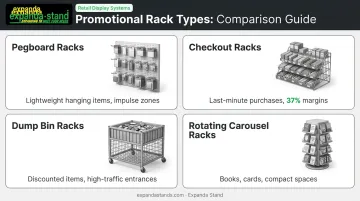
Freestanding circular or cylindrical display units with spinning shelves or peg panels. Customers access products from all sides without moving. Commonly used for books, greeting cards, small packaged goods, and accessories in compact spaces where floor area is at a premium.
Back-Store and Storage Racks
17. Slotted Angle Racks
Heavy-duty steel racks with bolt-and-slot construction used primarily in stockrooms and back-of-store areas for organised inventory storage. Not customer-facing, but essential for efficient stock management and quick replenishment of shop-floor shelves. Expanda Stand's M-Lock light duty storage systems support loads up to 750kg per level and feature boltless assembly.
18. Wire Mesh and Basket Display Racks
Open-wire shelving or hanging wire basket systems providing full product visibility from all angles. Used for fruits, bread, packaged snacks, and promotional items. The open structure reduces dust accumulation and improves air circulation — relevant for perishable products. Expanda Stand's stackable basket/alligator units are designed specifically for snack, egg, and bakery display adjacent to standard shelving.
19. Heavy-Duty Storage Racks
Industrial-grade steel shelving — longspan or pallet-compatible racks — used in back-store, receiving areas, or mezzanine levels of large supermarkets and hypermarkets. Expanda Stand's pallet storage systems handle loads from 1,000kg up to 4,000kg+ per level, with FIFO and LIFO inventory management configurations available.
20. Specialty and Branded Display Racks
Custom-fabricated or brand-provided fixtures designed to showcase a single product line, brand, or seasonal category — festival gift sets, electronics accessories, or a specific food brand's full range. The distinctive appearance sets them apart from standard shelving, reinforcing brand identity directly at the point of sale. Expanda Stand manufactures custom branded displays with integrated header, sub-header, and side branding options through their in-house sheet metal fabrication facility.
How to Choose the Right Supermarket Rack for Your Store
No single rack type is universally best. The right selection depends on your store format, product mix, floor area, traffic patterns, and budget. Here are the four factors that matter most:
Product-to-Rack Match
Every rack type has a product profile it serves best:
- Heavy packaged goods → robust steel gondola or wall racks
- Fresh produce → easy-clean sloped trays in stainless or coated steel
- Small hanging items → pegboards with standard-pitch hooks
- Frozen and chilled products → refrigerated display cases
Choosing a rack that doesn't suit the product's weight, size, or access requirement leads to poor presentation and potential safety issues.
Zone-Based Planning
Effective supermarket layouts assign specific rack types to specific zones:
| Store Zone | Recommended Rack Type |
|---|---|
| Centre aisles | Gondola racks |
| Perimeter walls | Wall racks, multi-tier shelving |
| Aisle ends | End cap racks |
| Checkout lanes | Impulse/checkout racks |
| Entrances | Dump bins, bulk display racks |
| Stockroom | Slotted angle, heavy-duty storage racks |
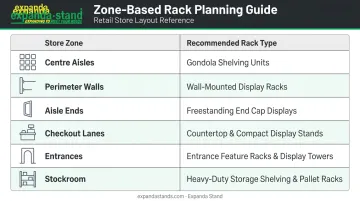
A rack placed in the wrong zone underperforms regardless of its quality.
Load Capacity and Material
Racks must match the weight of products they carry. Powder-coated mild steel is the industry standard for general shelving — durable and corrosion-resistant. Food-contact areas (produce sections, refrigerated zones) require stainless steel or food-safe materials that comply with FSSAI guidelines for food display equipment.
Customisation and Scalability
As stores evolve — product ranges expand, seasonal displays rotate, traffic patterns shift — racks that can't be reconfigured become obstacles. Before purchasing, verify:
- Shelf height adjustability (Expanda Stand systems use 50mm pitch increments)
- Accessory compatibility — Tegometall-compatible systems support a broad range of add-on fittings
- Modular expansion capability: whether bays can be added without replacing the whole system
Expanda Stand's ISO 9001:2015 certified manufacturing covers custom-designed supermarket racks built to exact store dimensions, using in-house laser cutting, CNC punching, MIG/TIG welding, and powder coating — so store layouts don't have to bend around off-the-shelf sizes.
Mistakes to Avoid When Finalising Your Rack Selection
Avoid these three common errors before you sign off on your rack layout:
- Going all-in on gondolas. Retailers doing their first fitout often outfit the entire floor with gondola racks — and leave revenue on the table by skipping end caps, checkout racks, and impulse displays that perform best in their specific positions.
- Choosing looks over load capacity. A visually striking specialty rack is a poor investment if it can't handle your product weight, access requirements, or restocking workflow. Lock in function first, then consider appearance.
- Overlooking future flexibility. Before committing, confirm shelf adjustability, accessory compatibility, and modular expansion options. A rack system that can't adapt to seasonal changes or range expansions becomes a costly obstacle within a few seasons.
Conclusion
Supermarket racks are not a single product category. They are a diverse ecosystem of 20 distinct fixture types, each engineered for a specific store zone, product type, and shopper interaction. Treating them as interchangeable is one of the most expensive mistakes in retail fitout planning.
Choosing the right combination of rack types, matched to the correct zone and product category, is one of the highest-leverage decisions a store owner or retail planner makes. It directly affects space utilisation, product visibility, and sales conversion — before a single pricing or promotional decision is made.
Whether you are planning a new store or refitting an existing one, use this breakdown as a working checklist: match each zone to its rack type, verify load requirements, and confirm that your fixture mix supports the shopper journey from entry to checkout. Manufacturers like Expanda Stand offer custom-built rack systems across all 20 categories, which is useful when standard off-the-shelf dimensions do not suit your floor plan or product range.
Frequently Asked Questions
What are the different types of supermarket racks?
The main categories include aisle racks (gondola, end cap, corner, bulk display), wall racks (wall-mounted shelving, slatwall, multi-tier), product-specific racks (refrigerated, produce, wine), promotional racks (pegboard, checkout, dump bin, carousel), and back-store storage racks. Most stores use a combination tailored to their format and product mix.
What types of racks are best for retail?
Gondola racks are the most versatile for general merchandise, end cap racks deliver the highest visibility for promotions, and wall racks are most efficient for perimeter space. Gondola racks are the most versatile for general merchandise, end cap racks deliver the highest visibility for promotions, and wall racks are most efficient for perimeter space. The right choice depends on your product category, store zone, and customer traffic pattern.
What is the most commonly used rack in supermarkets?
Gondola shelving is the most prevalent rack type. Its double-sided design, adjustable shelves, and compatibility with a wide range of product categories — from packaged foods to household goods — make it the default choice for centre-aisle configurations in supermarkets and hypermarkets.
What materials are supermarket racks typically made of?
Powder-coated mild steel is standard for general shelving, while stainless steel is used for food-contact and refrigerated areas. Specialty and display applications may combine steel with plastic, tempered glass, or wood depending on aesthetic or functional needs.
Can supermarket racks be customised to fit different store sizes?
Yes. Most commercial rack manufacturers offer customisation in height, depth, length, colour, and configuration. Modular designs allow racks to be extended or reconfigured as a store's product range or layout changes. Expanda Stand fabricates racks to exact store dimensions using in-house sheet metal processing.
How do I decide how many racks my store needs?
The number of racks depends on total floor area, aisle width (minimum 900mm for accessibility), SKU count, and traffic flow planning. A store layout plan prepared before purchase prevents over- or under-ordering and ensures each rack type is placed in its optimal zone.