Introduction
Picture this: you're walking through a busy market street, passing shop after shop. Most barely register. Then one stops you — not because of a discount sticker, not because someone called out to you, but because something in the window simply pulled you in. That pause is visual merchandising doing its job.
It's the strategic use of store design elements — layout, lighting, colour, displays, and fixtures — to attract customers, communicate brand identity, and drive purchases. Done well, it shapes what shoppers see, feel, and ultimately buy, often before a single word is exchanged.
This article covers:
- What visual merchandising is and how it works
- The major types every retailer should know
- Core principles behind displays that actually convert
- Practical tips you can apply to your store
Key Takeaways
- 76% of purchase decisions are made inside the store — visual merchandising directly influences most of them
- Visual merchandising covers window displays, store layout, signage, fixtures, and seasonal themes
- Core principles include the Rule of Three, eye-level placement, and sensory merchandising
- Quality fixtures are the structural backbone — poor ones undercut even well-planned displays
- Audit displays regularly, rotate seasonal themes, and test layout variations to drive consistent results
What Is Visual Merchandising?
Visual merchandising is the practice of organising and presenting products — along with every design element around them — to shape the customer's experience and encourage purchases. It covers colour, lighting, layout, signage, and physical displays. The goal isn't aesthetics for its own sake. Every arrangement is designed to guide where shoppers look, where they walk, and what they buy.
Visual merchandising applies to every touchpoint a customer encounters — from the street outside to the checkout counter:
- The window display visible from the street
- The façade, signage, and entrance area
- The path through the store floor
- Individual shelf arrangements and product groupings
- Point-of-purchase setups near the checkout
- Online storefronts and digital product presentations
What Does a Visual Merchandiser Actually Do?
A visual merchandiser is responsible for making all of the above work together. Day-to-day tasks include:
- Designing and installing window displays
- Arranging in-store product groupings and featured displays
- Styling mannequins and props
- Planning shelf layouts and deciding which products go where
- Executing seasonal and promotional changeovers
These tasks connect directly to marketing, brand communication, and sales planning. A poorly positioned product or an inconsistent store layout sends a signal to shoppers — just not the one the brand intended. Done well, visual merchandising makes the store itself do the selling.
Why Visual Merchandising Matters for Retail Stores
Here's the clearest argument for investing in visual merchandising: according to POPAI's 2014 Mass Merchant Study, 82% of mass-merchant purchase decisions were made in-store. That same study found that 16% of unplanned purchases were triggered by a display the shopper encountered during their trip. What customers see directly determines what they buy.
Three Core Business Benefits
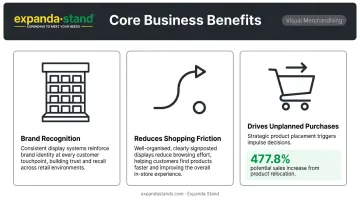
- Builds brand recognition — recurring colours, display styles, and signage formats create a consistent look shoppers begin to associate with your brand's quality and personality.
- Reduces shopping friction — a well-organised store lets customers find what they need, discover what they didn't expect, and move through the space without confusion. Research in the Journal of Retailing confirmed that store-induced pleasure predicted both extra time and extra money spent in-store.
- Drives unplanned purchases — strategic placement guides shoppers toward decisions they hadn't planned. A 2020 field experiment across 214 perfumery stores found that relocating just 8 products to display boxes near checkout produced sales increases ranging from 79.7% to 477.8% for those items.
These effects hold across every retail format — hypermarkets, supermarkets, pharmacies, boutiques, and hardware stores alike.
Types of Visual Merchandising
Visual merchandising is a collection of interrelated elements, each playing a distinct role in shaping the customer's journey through your store. Here are the primary types.
Window Displays and Exterior Elements
The window display is a potential customer's first interaction with your store. Research by Sen, Block, and Chandran found that information communicated by a store window directly influences shopping decisions — store-image and merchandise cues affect whether someone enters, while product-specific cues influence purchase decisions once inside.
Beyond the window itself, exterior elements include:
- Outdoor signage and fascia branding
- Awnings and entrance design
- Façade lighting and colour
These exterior touches set expectations before a customer crosses the threshold. A well-executed exterior display pulls foot traffic in; a neglected one signals to passers-by that the interior won't be worth their time.
Store Layout and Floor Planning
Layout dictates the path a customer takes through your space — and that path directly affects what they see, discover, and spend. Research by Hui, Inman, Huang, and Suher found that each additional 10% of in-store travel distance increased unplanned spending by approximately 15%.
Key layout considerations:
- Place high-demand "need" products toward the back, drawing customers past other merchandise
- Position "want" products and impulse buys near the entrance and checkout zones
- Create clear sightlines so shoppers can orient themselves quickly
- Identify hot zones (high-traffic areas) and cold zones (low-traffic corners) to position products accordingly
Shelf organisation matters too. A study by Dreze, Hoch, and Purk found that shelf reorganisation alone produced 5–6% changes in sales, while customised shelf sets delivered 4% gains in sales and profits.
Interior Displays and Fixtures
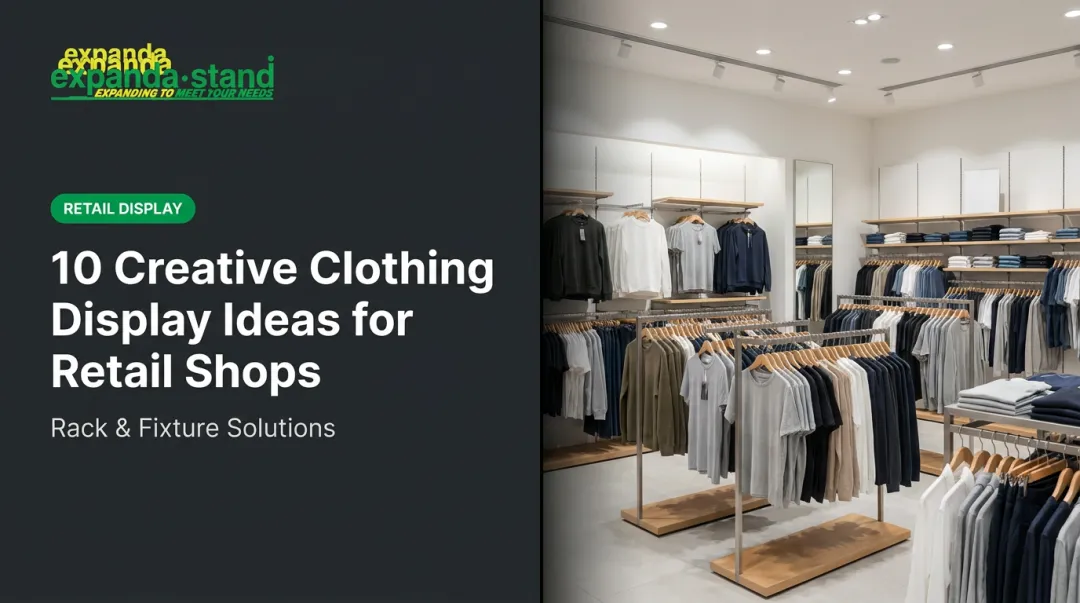
Inside the store, the quality and design of physical fixtures directly influence how products are perceived. Flimsy shelving communicates low value; sturdy, well-designed fixtures communicate quality — before a customer even reads a label.
Interior display types include:
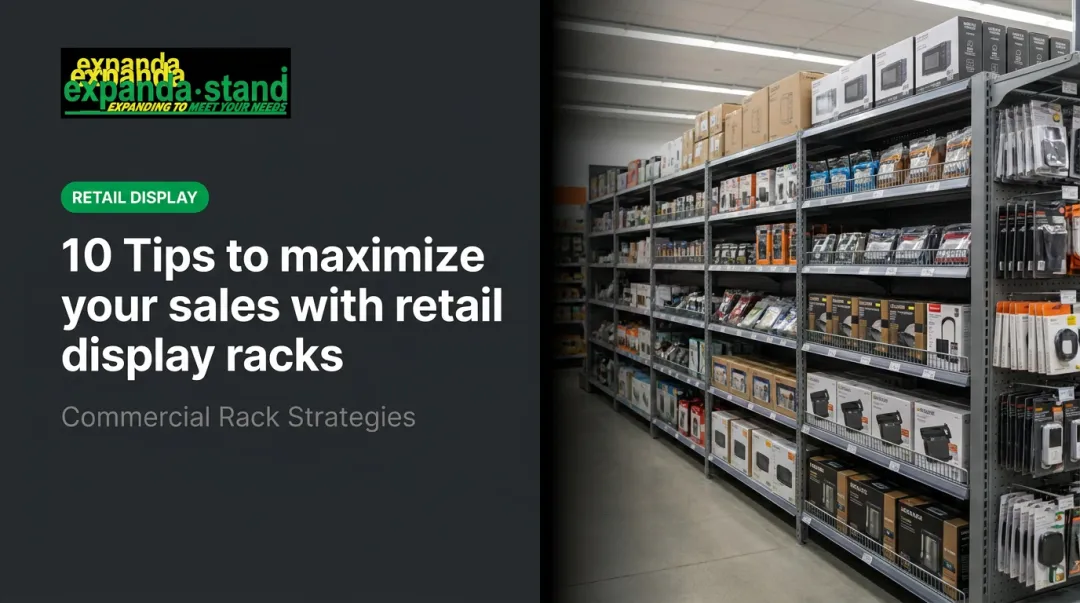
- Gondola shelving systems for aisle-based merchandising
- End-cap displays at the close of aisles for featured or promotional products
- Wall-mounted displays that use vertical space efficiently
- Point-of-purchase setups positioned near billing counters
- Power wing / side kick units for impulse-purchase placement
- Dump bins and promo bins for high-volume, clearance, or seasonal items
Expanda Stand produces all of these fixture types — gondola shelving, end-cap racks, side kick units, and cashier gondolas — with modular configurations designed to adapt as your merchandising needs shift.
Signage and Point-of-Purchase (POP) Displays
Signage does two jobs simultaneously: navigation and storytelling. Good signage helps customers find what they need quickly; great signage also builds a narrative around products, promotions, or seasonal themes.
Research by Otterbring et al. found that in-store signage increases product detection and draws visual attention to displayed items. According to the Sign Research Foundation, four factors determine whether signage is legible at point of viewing:
- Letter size relative to viewing distance
- Contrast between text and background
- Placement at natural sightlines
- Sign height within the customer's field of vision
POP displays, positioned near checkout counters and high-traffic zones, are particularly effective for last-minute decisions. One German perfumery study demonstrated this directly: relocating products to checkout-area display boxes produced measurable sales increases without any change to pricing or promotion.
Seasonal and Thematic Displays
Seasonal displays — for festivals, holidays, product launches, or category promotions — create urgency and freshness. They give customers a reason to return and signal that the store is active, current, and worth another visit.
Effective seasonal merchandising:

- Aligns display themes with marketing and promotional calendars
- Coordinates colours, props, and signage around a single clear idea
- Draws attention to specific product categories at peak purchase moments
- Creates add-on purchase opportunities by grouping complementary products
Rotating themes also prevent the store from feeling stale. A customer who visited two months ago and finds the exact same layout has little incentive to linger.
Key Principles of Visual Merchandising
Effective visual merchandising follows a set of well-researched principles that help retailers make intentional decisions about how their space looks, feels, and functions.
Balance, Symmetry, and the Rule of Three
Visual balance determines the mood your store communicates. Symmetrical arrangements feel formal and ordered — appropriate for premium or luxury brands. Asymmetrical displays feel dynamic and contemporary, better suited to lifestyle or fashion retail.
Two foundational display principles:
- The Rule of Three: Products displayed in odd numbers attract more attention than even groupings. Three items at varying heights create natural visual interest.
- The Pyramid Principle: One hero product elevated at the top, with supporting products arranged below it. The eye travels up to the focal point, then explores what surrounds it.
Colour, Lighting, and Atmosphere
Colour and lighting are two of the most powerful tools in visual merchandising — and the most commonly underused.
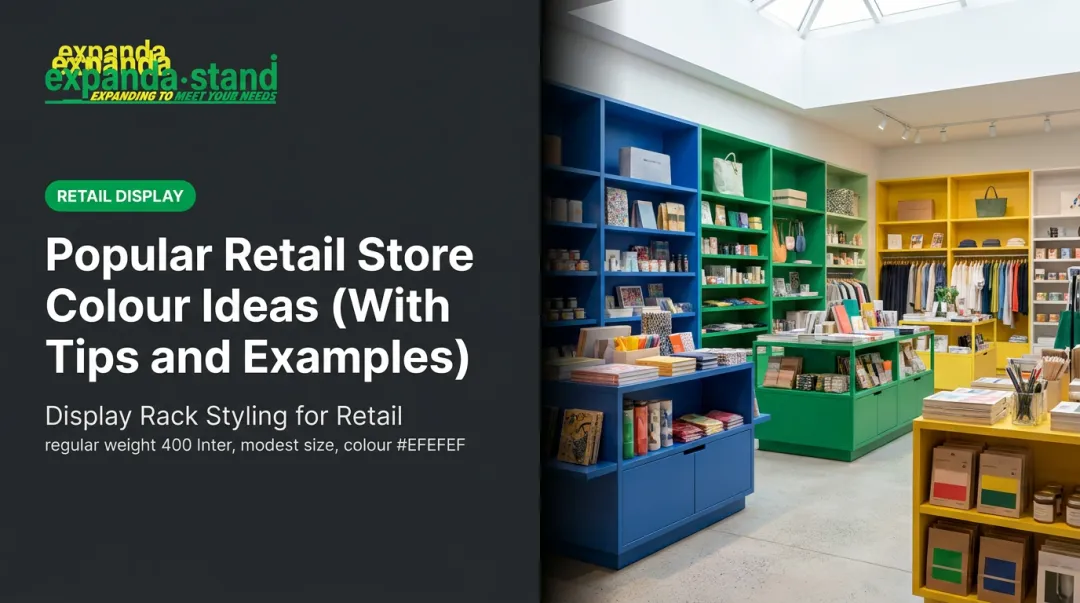
Colour research: Bellizzi, Crowley, and Hasty established that colour shapes how shoppers perceive retail environments. A follow-up study by Bellizzi and Hite found that blue retail environments generated more favourable evaluations and purchase likelihood compared to red or orange-toned spaces.
Lighting research: Areni and Kim found that brighter in-store lighting caused shoppers to examine and handle more merchandise. Quartier, Vanrie, and Van Cleempoel confirmed that lighting directly affects atmosphere perception and emotional response.
Practical applications:
- Use focused accent lighting to draw attention to hero products or featured displays
- Ensure colour choices are consistent with brand identity, not chosen arbitrarily
- Adjust lighting warmth by zone — warmer tones in lifestyle sections, cooler tones in technical or pharmacy areas
Eye-Level Placement and Product Hierarchy
Where a product sits on the shelf determines how often it gets noticed. Sigurdsson, Saevarsson, and Foxall tested this directly with in-store potato-chip experiments: middle shelf placement produced 7.5% purchase share versus 3.3% for high-shelf placement in one store test.
Product placement hierarchy:
- Eye level: High-margin products, featured brands, and items you want to sell most
- Above eye level: Secondary options or brand leaders that customers will seek out regardless
- Below eye level: Economy options, bulk sizes, or products with loyal repeat buyers who will search for them
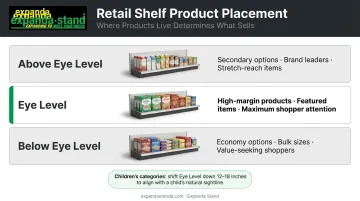
For children's categories, adjust the entire hierarchy downward to account for their sightlines.
Shelf placement handles where products land in the shopper's eye — but the broader store environment shapes whether they stay, explore, and buy. That's where sensory merchandising takes over.
Sensory Merchandising Beyond Sight
Visual merchandising, despite the name, engages all five senses. Research confirms each contributes meaningfully to store experience:
- Scent: A study by Leenders et al. found that congruent ambient scent in a supermarket affected store evaluations, actual time spent in-store, and overall sales
- Music: Milliman's 1982 study found that background music tempo directly influenced in-store traffic pace and sales volume — slower music slowed shoppers down and increased spending
- Touch: Grohmann, Spangenberg, and Sprott found that tactile input from fixtures and product displays affects product evaluations, particularly for categories where touch is a quality signal
Retailers who design for all five senses — not just appearance — give shoppers more reasons to linger, and more opportunities to buy.
Practical Tips to Improve Your Store's Visual Merchandising
Tip 1 — Audit and Edit Regularly
A cluttered or outdated store signals neglect. Customers read the state of your displays as a proxy for the quality of your products.
When auditing your store, look for:
- Displays that compete with each other for attention rather than supporting each other
- Empty space that makes shelves look undersupplied
- Props, signage, or arrangements that no longer align with current brand or season
- Products sitting in low-traffic cold zones with no reason for a customer to walk past them
Remove anything that doesn't serve a clear purpose. In visual merchandising, less is consistently more.
Tip 2 — Use Themes and Stay Trend-Aware
Themed displays — even simple, colour-coordinated arrangements around a product category — create focused storytelling moments. A skincare section arranged around a "morning ritual" theme sells the lifestyle, not just individual products.
Align themes with:
- Seasonal events and festivals (Diwali, New Year, back-to-school)
- Product launches or category promotions
- Design trends relevant to your retail category
- Your broader marketing calendar
Themed displays also drive add-on purchases naturally. When complementary products share a display, customers buy combinations they wouldn't have assembled themselves.
Tip 3 — Test Variations and Measure Results
Intuition is a starting point, not a strategy. The 2020 German perfumery experiment across 214 stores demonstrated that data-driven placement decisions — moving products to different locations and measuring the sales impact — produce results that intuition alone rarely finds.
Test variables worth measuring:
- Product placement changes (shelf position, zone, proximity to related items)
- Signage copy and positioning
- Display height and arrangement
- Lighting adjustments in specific zones
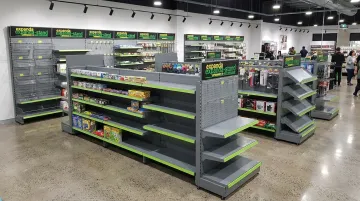
Modular fixtures make this practical. Gondola shelving, wall-mounted racks, and pegboard systems with adjustable shelves — like those Expanda Stand manufactures — let retailers reconfigure displays between trading periods without specialist labour. That flexibility turns testing from a one-off project into an ongoing part of how you manage the floor.
Frequently Asked Questions
What does visual merchandising do?
Visual merchandising shapes the in-store experience using layout, displays, lighting, and signage to attract attention and guide shoppers toward products. When executed well, it increases dwell time, drives impulse purchases, and builds a consistent brand experience from the entrance to the checkout.
What are the key principles of visual merchandising?
The core principles are the Rule of Three, eye-level product placement, intentional colour and lighting strategy, visual balance (symmetrical vs. asymmetrical), and sensory merchandising. Applied together, they make a store environment feel intentional — one where the display itself does the selling.
What are the main types of visual merchandising?
The five primary types are window displays and exterior elements, store layout and floor planning, interior displays and fixtures, signage and POP displays, and seasonal or thematic displays. Each addresses a different stage of the customer's journey through the store.
How does visual merchandising increase sales?
Strategic product placement makes it easier for shoppers to notice and reach the right products at the right moment. Attractive displays trigger impulse decisions, and organised layouts keep customers in-store longer — both of which lift average transaction values and encourage repeat visits.
What is the difference between visual merchandising and retail merchandising?
Retail merchandising covers product selection, pricing, and inventory management. Visual merchandising focuses specifically on how those products are presented and displayed to shape customer perception and influence buying behaviour at the point of sale.