The consequences of getting this wrong are real. FSSAI's 2020-21 enforcement data recorded over 1,07,829 food samples analysed nationally, with 28,347 found non-conforming and penalties exceeding ₹5 crore imposed across food businesses. While these figures cover all food categories, they reflect the scale of scrutiny food businesses face — grain storage practices are squarely in scope.
This article covers the storage principles, systems, pest protocols, and inventory practices that keep bulk grain in sellable condition from the moment it arrives to the moment it reaches your customer.
Key Takeaways
- Store grain at moisture levels below FSSAI maximums (14–15.5% depending on commodity) to prevent mould and mycotoxin growth
- Keep storage areas cool and well-ventilated — insects thrive at 30°C+ and 75% RH, typical in Indian back-stores during monsoon
- Match your storage system — sealed bins, modular heapers, or palletised sacks — to your volume and back-store vs. display needs
- FIFO rotation is a legal requirement under FSSAI Schedule 4
- Inspect stored grain weekly — smell, colour, and texture checks catch problems before they spread
Why Hypermarket Grain Storage Is Different
Most grain storage guidance is written for farms or FCI-style warehouses — large volumes, long holds, agricultural environments. Hypermarkets face a different problem.
They hold grain simultaneously as back-store inventory and retail product, with some SKUs turning over daily and others — a less popular pulse variety, for instance — potentially sitting for weeks. That slow-moving stock is where quality problems begin.
The Indian Climate Factor
Indian monsoon conditions create a particularly hostile environment for stored grain. According to FAO data, most stored-product insects develop optimally at around 30°C and 75% relative humidity — conditions that closely match the back-store areas of non-climate-controlled hypermarkets in Chennai, Mumbai, or Kolkata during June to September.
Without deliberate storage management, a shipment of wheat received in July can deteriorate significantly within weeks.
The Regulatory Dimension
FSSAI Licensing and Registration Regulations, 2011 (Schedule 4) set enforceable requirements for food business operators — requirements designed in part to address exactly these environmental risks:
- Section 5.2.5 mandates FIFO/FEFO stock rotation for all stored food materials
- Section 5.2.6 requires food to be stored on racks or pallets, away from walls, to allow cleaning and prevent pest access
- Dried foods including grains and pulses must be stored off the floor in sealable containers, per Schedule 4, Part V
Non-compliance carries real consequences: FSSAI inspections can result in product seizure, improvement notices, or suspension of the food business license.
The Three Non-Negotiables: Moisture, Temperature, and Airflow
Moisture Control
Grain moisture is the single most critical variable. FSSAI product standards (Chapter 2.4) set the following maximum moisture limits:
| Commodity | Maximum Moisture (FSSAI) |
|---|---|
| Rice (including brown and milled) | 15.5% by mass |
| Wheat grain | 14% by weight |
| Wheat flour / atta | 14% by mass |
| Whole pulses | 14% |
| Pulses without seed coat | 12% |
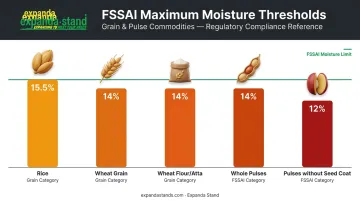
Grain stored above these thresholds creates conditions for mould growth — and mould produces mycotoxins. FSSAI Contaminants Regulations cap total aflatoxins at 15 µg/kg and aflatoxin B1 at 10 µg/kg in cereals and pulses. Exceeding these limits makes grain unsaleable and legally non-compliant.
Practical action: Use a calibrated moisture meter at the goods-receiving dock. Reject any grain shipment that arrives above the relevant threshold — no storage practice can reverse moisture damage once it sets in.
Temperature Regulation
Moisture damage rarely works alone — rising temperatures amplify the risk. FAO data confirms stored-product insects become inactive below 12°C and cannot establish infestations, but reaching that threshold in Indian hypermarket back-stores is generally impractical without full air conditioning.
A more realistic target is keeping grain storage areas below 25°C, using ceiling fans, roof insulation, or exhaust ventilation to reduce heat buildup. Even a 5°C reduction from peak ambient temperature noticeably extends grain shelf life.
Airflow and Spacing
Stagnant air around dense grain sacks creates localised hot and humid pockets — exactly the conditions that trigger mould and pest development. Minimum spacing practices:
- Stack sacks on raised pallets, never directly on the floor
- Leave at least 45–60 cm between stacks and walls
- Maintain walkway space between rows for air circulation and inspection access
- Check manufacturer and FSSAI stacking height limits before building tall stacks
Best Storage Systems for Bulk Grain in Hypermarkets
The right system depends on your storage volume, available space, and whether grain is stored in the back-store or displayed on the retail floor.
Sealed Food-Grade Bulk Bins
Sealed steel or food-grade plastic bins are the most controlled option for back-store grain storage. Key advantages:
- Physical barrier against pests and humidity infiltration
- Easy to clean between grain types — critical for allergen management
- Supports clear FIFO labelling and batch tracking
- Works well for high-turnover commodities like rice and atta
When sourcing bins, confirm compliance with FSSAI Packaging Regulations 2018 — food-contact materials must meet food-grade standards referencing BIS specifications such as IS 10146 for polyethylene and IS 10910 for polypropylene.
Modular Bulk Display Systems for the Retail Floor
Back-store bins handle containment — but for hypermarkets running open bulk grain sections on the staples aisle, the storage and display system need to work together.
Expanda Stand, an ISO 9001:2015-certified manufacturer based in Chennai with over 25 years of experience in retail fixtures, manufactures Loose Grain/Staple Display Heapers purpose-built for open bulk grain sections. Available in 30kg, 40kg, 50kg, and 80kg capacity configurations, these systems combine wood, stainless steel, and acrylic construction, with stainless steel and acrylic lid options for product protection.
Key features relevant to grain storage hygiene:
- Acrylic lids maintain product integrity and reduce open-air exposure
- Integrated signage for clear FIFO labelling and batch dating
- Horizontal and vertical configuration options to suit different floor layouts
- Tool-free assembly for easy reconfiguration as stock needs change
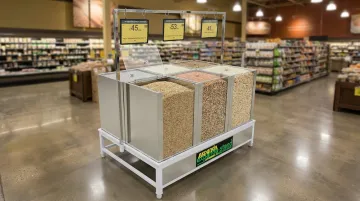
For hypermarkets needing custom configurations, Expanda Stand offers tailored design and manufacturing to specific store dimensions and capacity requirements. Contact their team at +91 44 2688 0800 or sales@expandastands.com.
Pallet-and-Sack Stacking
Traditional 50kg or 100kg sack storage on raised pallets works well for standard packaged grain with high turnover. Follow these stacking practices:
- Use wooden or steel pallets that keep sacks at least 15 cm off the floor
- Stack no more than 10–12 bags high to maintain structural stability
- Maintain 60 cm clearance from walls and between rows
- Ensure floors beneath pallets are moisture-proofed or sealed
Dedicated Grain Storage Rooms
The single most impactful structural decision a hypermarket can make is designating a separate room — or at minimum, a clearly partitioned back-store section — exclusively for dry grain.
Mixing grain storage with high-humidity goods like fresh produce accelerates spoilage significantly. A properly ventilated, insulated partition reduces ambient humidity exposure and simplifies pest monitoring.
Pest Prevention and Hygiene Protocols
By the time insects are visible in stored grain, the infestation is already well established. Effective pest management starts with exclusion and early detection — not treatment after the fact.
First Line of Defence: Sealed Storage
Sealed containers — whether bulk bins or lidded display heapers — physically prevent the common stored-grain pests from accessing grain. Identified species in Indian grain storage contexts include:
- Sitophilus oryzae (rice weevil)
- Rhyzopertha dominica (lesser grain borer)
- Tribolium castaneum (red flour beetle)
- Callosobruchus maculatus (pulse beetle)
All develop readily at the temperature and humidity conditions typical of Indian hypermarket back-stores. Sealed storage combined with low-moisture grain removes the two conditions these pests require to breed: access and humidity.
Cleaning Between Batches
Never top up bins or sacks — empty completely, clean thoroughly, then refill. Residual old grain at the bottom of a bin is the most common source of pest reinfestation and mould carryover. Schedule bin-cleaning before each new stock rotation cycle.
Monitoring Requirements
Under FSSAI Schedule 4, food businesses must maintain records of pesticides and insecticides used, including dates and frequency. Regarding fumigation: FSSAI's Food Grain Warehouse Guidance states that only phosphine and methyl bromide are registered fumigants in India, and both are classified as restricted pesticides — requiring licensed pest control operators for application. Do not use unlicensed chemical treatments.
Weekly monitoring checklist:
- Check for grain dust accumulation (sign of insect activity)
- Look for webbing or clumping in grain surface
- Smell for musty or off odours (early mould indicator)
- Inspect container seals and pallet surfaces for pest entry points
Stock Rotation and Inventory Practices
FIFO Is a Legal Requirement
FSSAI Schedule 4, Section 5.2.5 mandates FIFO (or FEFO where applicable) stock rotation. Practically, this means:
- Oldest grain must be dispensed or placed at the front of bins/shelves first
- New deliveries go behind or below existing stock — never on top
- Grain at the bottom of a bin should never remain there across multiple refill cycles
Batch Labelling and Tracking
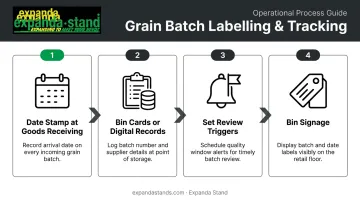
Implement a simple labelling system for every grain batch received:
- Date stamp all incoming grain at the goods-receiving point
- Bin cards or digital records — note batch number, arrival date, and supplier
- Set review triggers — flag any grain lot approaching its expected quality window for sensory inspection
- Use bin signage — retail floor bins should carry clear, visible batch and date labels; Expanda Stand's heaper bin systems include built-in signage slots that make this practical without additional fixings
FSSAI does not specify maximum retail ambient shelf lives for individual grain types, so hypermarkets should work from supplier-indicated best-before dates and their own sensory inspection results rather than generic timelines.
Stock Audit Frequency
Batch labelling only delivers value when paired with a consistent audit schedule. Conduct visual and sensory grain inspections at minimum once a week. During June–September, increase frequency to twice weekly given elevated ambient humidity.
Quarantine any batch immediately — and withhold it from sale — if it shows:
- Off odour or stale smell
- Unusual discolouration
- Surface clumping or caking
- Visible moisture or condensation on grain surfaces
Frequently Asked Questions
What storage systems are used for bulk grain at commercial scale?
Commercial grain storage uses bins, silos, and silo bags depending on volume. For hypermarket contexts — both back-store and retail floor — sealed bins and lidded modular bulk heapers are the most practical options.
What are the ideal moisture levels for storing grain in bulk?
FSSAI product standards set the following maximums: rice at 15.5%, wheat and atta at 14%, whole pulses at 14%, and pulses without seed coat at 12%. Grain above these thresholds is prone to mould growth and should be rejected upon receipt.
How do hypermarkets prevent pest infestations in bulk grain storage?
Sealed containers, thorough bin cleaning between batches, and weekly checks for dust accumulation, webbing, and off odours are the core measures. Where fumigation is needed, only registered products applied by licensed operators are permitted.
What is the FIFO method and why is it important for grain storage?
FIFO (first-in, first-out) means older grain stock is always used or sold before newer arrivals. It prevents quality deterioration from long storage and is legally required under FSSAI Schedule 4, Section 5.2.5.
How often should bulk grain in a hypermarket be inspected?
Weekly at a minimum, with twice-weekly checks recommended during the monsoon season. Inspect for off odours, discolouration, moisture ingress, and any pest indicators during each check.
What types of containers are best for bulk grain storage in hypermarkets?
Food-grade sealed plastic or steel bins suit back-store storage, offering reliable pest and moisture protection. On the retail floor, lidded modular bulk heapers — available in stainless steel and acrylic configurations from manufacturers like Expanda Stand — combine product protection with open-display functionality.