Glassware is one of the few non-food categories that sells itself through appearance — but only when the display does its job. A well-lit, logically organised glassware section stops browsers, creates aspiration, and converts footfall into sales. A poor one does the opposite.
This guide covers the practical decisions that separate high-performing glassware sections from average ones: fixture selection, shelf layout, lighting, cross-merchandising, and breakage prevention. Each section is grounded in what actually works in a supermarket environment.
Key Takeaways
- 76% of grocery purchase decisions happen in-store (according to POPAI research) — your shelf display is doing the real selling work
- Matching fixture to product type matters: gondola shelving suits everyday glassware, while glass-front cabinets protect premium ranges
- Eye-level shelf placement can increase sales by up to 39% compared to the worst vertical position
- LED lighting with the right colour temperature makes glass refract and sparkle, drawing shoppers from across the aisle
- Cross-merchandising glassware near beverages, seasonal meals, or gifting zones lifts basket size without extra floor space
Why Glassware Display Directly Impacts Supermarket Sales
Shoppers rarely walk into a supermarket with a specific wine glass brand in mind. The display creates the intent.
POPAI's grocery research found that 76% of purchase decisions are made in-store, and nearly 1 in 6 brand purchases occurred when a display featuring that brand was present. The display itself is doing the selling — not the brand's reputation, not the packaging alone.
For kitchenware and housewares, the numbers support investment in physical presentation. Progressive Grocer reports that 81% of gadget and bakeware buyers made their purchases in-store, and SmartBrief found that while roughly 60% of kitchen gadget purchases are planned, 17% are impulse buys triggered in the aisle. Glassware — lower-commitment than a blender, visually appealing, and giftable — sits squarely in that impulse zone.
The display environment also shapes perceived value. A crowded shelf with no categorisation and flat overhead lighting signals low quality, making shoppers less likely to pay full price. The same glassware in a clean, well-lit, logically organised section reads as premium — which is why a ₹299 tumbler can look like a ₹499 one, or vice versa.
Choosing the Right Display Fixtures for Glassware
Fixture choice is where most supermarkets make their first mistake. One gondola type does not serve the full glassware range.
Match Fixture to Product Type
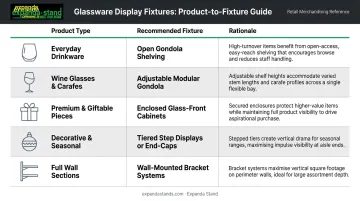
| Product Type | Recommended Fixture | Why |
|---|---|---|
| Everyday drinkware, tumblers, mugs | Open gondola shelving | High accessibility, fast replenishment, easy browsing |
| Wine glasses, tall vases, carafes | Adjustable modular gondola | Accommodates varied heights without dead space |
| Premium or giftable pieces | Enclosed glass-front cabinets | Signals value, reduces handling breakage, deters theft |
| Decorative glass, seasonal items | Tiered step displays or end-caps | Creates focal point, improves visibility across heights |
| Full wall sections | Wall-mounted bracket systems | Maximizes vertical space, strong visual impact |
Key Fixture Specifications to Check
Before specifying any shelving, verify these details with your supplier:
- Shelf depth: Shallow shelves (under 300mm) create tipping risk for tall glassware; deeper shelves suit heavy multipacks
- Load capacity: Industry shelf manufacturers publish static load ratings; ensure weight distribution is even, not front-heavy
- Pitch adjustability: A 50mm pitch adjustment system lets you reconfigure shelf heights as your range changes. This matters when a new range includes 400mm-tall vases alongside 100mm shot glasses
- Shelf material: Toughened glass shelves (8mm is a common standard) work well for premium sections; powder-coated steel suits high-volume everyday areas
Why Modular Systems Pay Off
Fixed-height shelving creates dead space above shorter glassware — wasted vertical real estate and a visual signal of poor planning. Adjustable modular systems solve this. They also allow seasonal reconfiguration: compress the range in January, expand it ahead of Diwali or New Year with minimal disruption.
Expanda Stand's gondola shelving systems are built for this flexibility: tool-free assembly, 8mm toughened glass shelf options for premium sections, and modular configurations that adapt as your range evolves. Their custom manufacturing capability means supermarkets can specify exact dimensions, load tolerances, and finishes — rather than forcing product ranges into ill-fitting standard fixtures. For custom requirements, their team handles everything from concept through to on-site commissioning.
Smart Zoning and Layout Strategies for the Glassware Aisle
Layout logic directly affects sales. Research by Dreze, Hoch, and Purk found that the gap between the best and worst vertical shelf position averages a 39% difference in sales — and moving a product to a 56-inch eye-level shelf increased sales by 8% compared to a 72-inch shelf.
Zone by Occasion, Then Subcategory
Group glassware the way shoppers think about it:
- Drinkware — tumblers, wine glasses, mugs, shot glasses
- Serveware — pitchers, carafes, serving bowls
- Decorative and gifting — vases, decorative bottles, gift sets
Within each zone, use subcategory signage so shoppers can navigate without scanning every shelf. A customer looking for a wine glass shouldn't have to hunt past vases to find it.
Vertical vs. Horizontal Blocking
- Vertical blocking (same product type in a column) helps shoppers compare within a category and works best for everyday drinkware where customers weigh options
- Horizontal blocking (same brand across a row) suits brand-led promotions and works better for premium ranges where brand identity drives choice
Neither is universally superior. A practical rule: use vertical blocking for value-led categories where shoppers compare, horizontal blocking for premium lines where the brand name closes the sale.
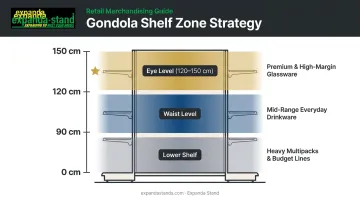
Shelf Position by Margin
- Eye level (120–150cm from floor): Premium, high-margin, or visually distinctive glassware
- Waist level: Mid-range everyday drinkware
- Lower shelves: Heavy multipacks, bulk buys, budget lines
Traffic and Location
Place glassware near crockery, kitchen textiles, or home accessories since these categories attract the same shopper mindset. Fragile glassware should also stay away from high-collision points: aisle junctions, trolley bays, and narrow crossings.
Resist the urge to over-face shelves. For glassware, a few well-spaced pieces outperform a packed row every time:
- Crowding creates visual noise that makes products harder to assess
- White space between pieces lets each item stand out individually
- Fewer facings reduce breakage risk from browsing customers
Lighting and Visual Merchandising Techniques That Sell Glassware
Glass is uniquely responsive to light. No other product category rewards lighting investment the same way — because glass refracts and reflects, good lighting creates sparkle and depth that draws shoppers from the far end of the aisle.
Practical Lighting Options
- LED shelf-edge strip lights: Illuminate individual shelf levels, creating depth and product separation
- Overhead spotlights (30–45° angle): Create controlled brilliance without harsh glare
- Warm white (~3000K): Best for coloured, amber, or decorative glass
- Cool white (4000K–5000K): Suits clear crystal and contemporary designs
- CRI 80+: Higher colour rendering index means colours appear true-to-life — important for coloured glassware
A 21-week supermarket LED lighting study reported by Grocery Dive found that LED-lit sections sold 2% more products per customer — a consistent lift across high transaction volumes. For glassware, where sparkle is a direct selling feature, that baseline effect tends to run higher.
Colour Blocking and Visual Organisation
Arrange glassware by colour family across shelf rows — clear glass together, then blue tones, amber, and so on. This creates a gradient that's visually satisfying and guides the eye across the full range. A consistent colour sequence also makes restocking faster and keeps the display looking intentional even during busy trading periods.
Shelf Talkers and POP Signage
Shoppers often feel uncertain about glassware choices — whether a glass suits everyday use or is too delicate for a dishwasher. Brief, specific shelf talkers remove that hesitation at the point of decision:
- "Dishwasher safe — perfect for everyday dining"
- "Gifting set — arrives in presentation box"
- "Pairs with our red wine selection — Aisle 7"
Each label answers the unspoken question before the shopper moves on — turning passive browsing into a confident purchase.
Cross-Merchandising and Seasonal Promotion Ideas
Category Adjacencies That Work
The strongest cross-merchandising placements solve an immediate need:
- Wine glasses near the wine aisle — shoppers buying wine are already thinking about serving it
- Tumblers near cold drinks and juices — aligns with the consumption occasion
- Mugs near tea, coffee, and hot beverages — natural pairing, minimal floor space required
- Pitchers and carafes near cocktail mixers or seasonal beverages
The principle is simple: place the item where the need already exists. Supermarkets that position serving items near related food and beverage categories consistently see stronger attachment sales than those that keep housewares isolated in a single aisle.
Seasonal and Occasion Themes
Dedicated end-cap or feature displays for seasonal rotations create urgency without overhauling the permanent section:
- Diwali: Gift sets, decorative glass bowls, festive colour options
- New Year: Champagne flutes, bar glassware, entertaining bundles
- Summer: Tumblers, pitchers, outdoor-suitable drinkware — a high-turnover category when temperatures rise and household entertaining picks up
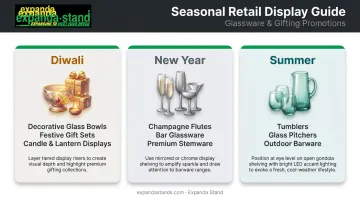
Keep seasonal features tight — one end-cap, fully committed to a theme, outperforms a half-hearted spread across three shelf bays.
Lifestyle Vignettes at Aisle Ends
A small table-setting arrangement at the aisle end, incorporating glasses, plates, napkins, and a simple centrepiece, shows shoppers what a complete set looks like. This styled visual drives multi-item purchases that a standard shelf layout rarely achieves. Expanda Stand's Side Kick units and promotional wing fixtures are well-suited for this kind of curated feature display.
Preventing Breakage and Maintaining Display Standards
Breakage Prevention Tactics
- Use rubber or silicone shelf liners to prevent glass from sliding during browsing
- Place heavier, sturdier items on lower shelves to reduce fall distance and impact risk
- Leave adequate spacing between pieces so customers can pick up one item without knocking its neighbour
- Fit shelf-edge guards on lower shelves in high-traffic sections
- Avoid stacking glass vertically unless the fixture is purpose-built for it
Weekly Display Audit Checklist
Store staff should run through this weekly:
- Remove any chipped, cracked, or damaged pieces immediately — one broken item devalues everything around it
- Face all items forward so labels and designs are visible
- Wipe glass surfaces to remove dust and fingerprints — clean glass looks more premium
- Return misplaced items to their correct category zone
- Check shelf liners are flat and intact
- Confirm adequate spacing between pieces after replenishment
Staff Handling Practices
The checklist keeps displays consistent, but daily restocking is where most breakage actually happens. Basic handling training keeps that risk low:
- Use two-handed holds for all glassware during replenishment
- Never stack unstable pieces while restocking — set them down individually
- Treat every restocking run as a display reset, not just a shelf fill
Frequently Asked Questions
How should glassware be organised on supermarket shelves?
Group glassware by use occasion — drinkware, serveware, decorative — then by sub-category within each group. Place premium items at eye level and everyday lines on lower shelves. Clear signage at each zone removes navigation friction and helps shoppers find what they need quickly.
What type of shelving is best for displaying glassware in a supermarket?
Adjustable modular gondola shelving suits most everyday glassware, while enclosed glass-front cabinets work better for premium or fragile pieces. Prioritise adequate shelf depth to prevent tipping, verified load capacity, and adjustable shelf heights to accommodate changing product ranges.
How can lighting improve glassware sales in a retail setting?
LED shelf-edge lights and overhead spotlights angled at 30–45° make glass refract and sparkle, drawing shopper attention across the aisle. Warm white (around 3000K) suits coloured or decorative glass, while cool white (4000K–5000K) is better suited to clear crystal and contemporary designs.
How do I prevent glassware breakage in a supermarket display?
Use rubber or silicone shelf liners to prevent sliding, space pieces for safe single-item handling, position heavier items on lower shelves, and fit shelf-edge guards in high-traffic aisles.
How often should supermarket glassware displays be refreshed?
A weekly tidy and face-up routine handles ongoing maintenance. A full seasonal reset — at minimum quarterly — should introduce new themes, remove slow-moving lines, and align with any new product ranges or promotional campaigns.
What is cross-merchandising and how does it work for glassware?
Cross-merchandising places glassware near complementary products — wine glasses near the wine aisle, tumblers near cold drinks — to reach shoppers already in a related purchase mode. It increases average basket size with no additional floor space required.