Introduction
India's organised retail sector is expanding fast. According to DMart's FY 2023-24 annual report, organised retail grew 16% to INR 11 trillion and now accounts for 11.8% of total retail. Reliance Retail alone opened 2,659 stores in FY 2024-25. Apollo Pharmacies is adding 550–600 outlets annually.
With that growth comes a harder problem: more SKUs, tighter floor space, and rising customer expectations — all inside the same four walls.
Gondola racks are how most stores solve that problem — yet many owners install them without fully understanding why they work. This guide covers what gondola racks are, how they function, and the specific benefits that have made them the standard shelving system across supermarkets, pharmacies, hypermarkets, and convenience stores. By the end, you'll know exactly what to look for when choosing one.
Key Takeaways
- Gondola racks are freestanding, modular shelving units available in single-sided (wall) and double-sided (island) configurations
- Key advantages include space maximisation, merchandising flexibility, durability, and lower long-term costs
- Double-sided island units turn centre-floor space into productive selling area without expanding the store footprint
- Pegboard hooks, slatwall panels, and end-cap displays enable fast reconfiguration for seasonal promotions
- The right gondola configuration directly affects revenue per square foot, SKU count, and restocking speed
What Is a Gondola Rack?
A gondola rack is a freestanding shelving system built around a stable base, vertical upright panels, and adjustable shelves. The two main formats are:
- Double-sided island units — accessible from both sides, placed in the centre of a store to create product aisles
- Single-sided wall units — mounted along perimeter walls or used as end-cap displays at aisle ends
That physical structure does real commercial work. Gondola racks determine where products sit, how customers move through a store, which items get eye-level prominence, and how many SKUs a store can realistically carry.
Used across supermarkets, hypermarkets, pharmacies, hardware stores, and convenience shops, they are the structural foundation through which retailers manage product placement, floor flow, and buying decisions — not passive furniture, but an active tool for driving sales.
Key Advantages of Gondola Racks
The advantages below connect directly to metrics store owners track: revenue per square foot, fixture cost over time, restocking speed, and promotional sell-through. Each advantage maps to a specific operational or financial outcome.
Advantage 1: Space Maximisation and Floor Efficiency
Retail floor space in India is both scarce and expensive. JLL reported 8.1 million sq ft of retail leasing across seven Indian cities in 2024, while new supply added only 1.7 million sq ft — meaning demand for space significantly outpaces availability. Cushman & Wakefield placed prime retail rents at USD 229 per sq ft annually in Khan Market, with Connaught Place at USD 158.
Every square foot has to work.
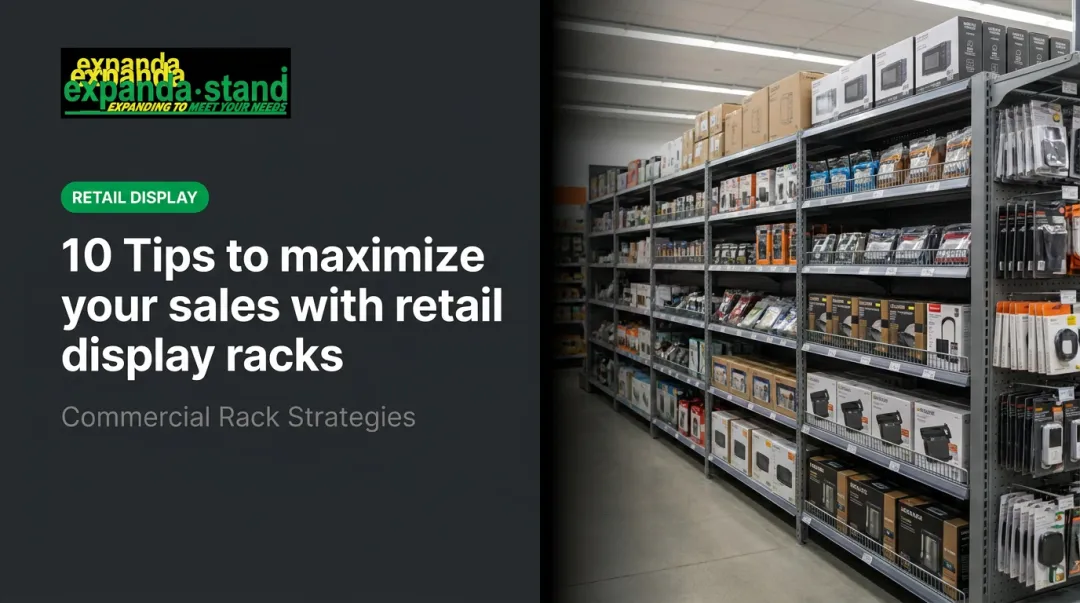
Double-sided island gondola units address this directly. A single fixture presents products on two faces simultaneously, allowing a store to double its display surface without doubling floor area consumed. Single-sided wall units activate perimeter space that would otherwise go unused.
The practical impact:
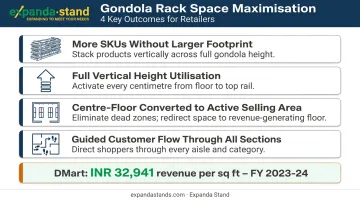
- More SKUs on display without increasing the store's physical footprint
- Vertical height is utilised fully, from base shelf to top shelf
- Centre-floor space becomes active selling area rather than dead circulation space
- Deliberate aisle layouts guide customer flow through every store section
DMart's annualised revenue per retail business area sq ft was INR 32,941 in FY 2023-24 — up from INR 31,096 the previous year. That metric reflects what disciplined space management produces at scale.
KPIs most affected: SKU count per square metre, revenue per square foot, product display density
When this matters most: Urban stores with limited square footage, supermarkets managing large product ranges, stores aiming to increase SKU count without relocation
Advantage 2: Merchandising Flexibility and Customisation
Retail is not static. ITC launched 100 new FMCG products in FY 2025. NielsenIQ reported Indian FMCG value growth of 6.6% and volume growth of 6.5% in 2024. New product categories arrive constantly, promotions rotate, seasonal stock shifts, and supplier co-op campaigns demand fast display changes.
Fixed shelving has no answer to that pace of change — gondola racks are built for it.
Gondola systems like Expanda Stand's island and wall units feature tool-free assembly, so store staff can reconfigure shelf heights, swap accessories, and restructure aisle layouts without contractors or new fixture purchases. The shelf pitch adjustment (typically 50mm increments) means height changes take minutes, not hours.
The accessory ecosystem extends that flexibility further:
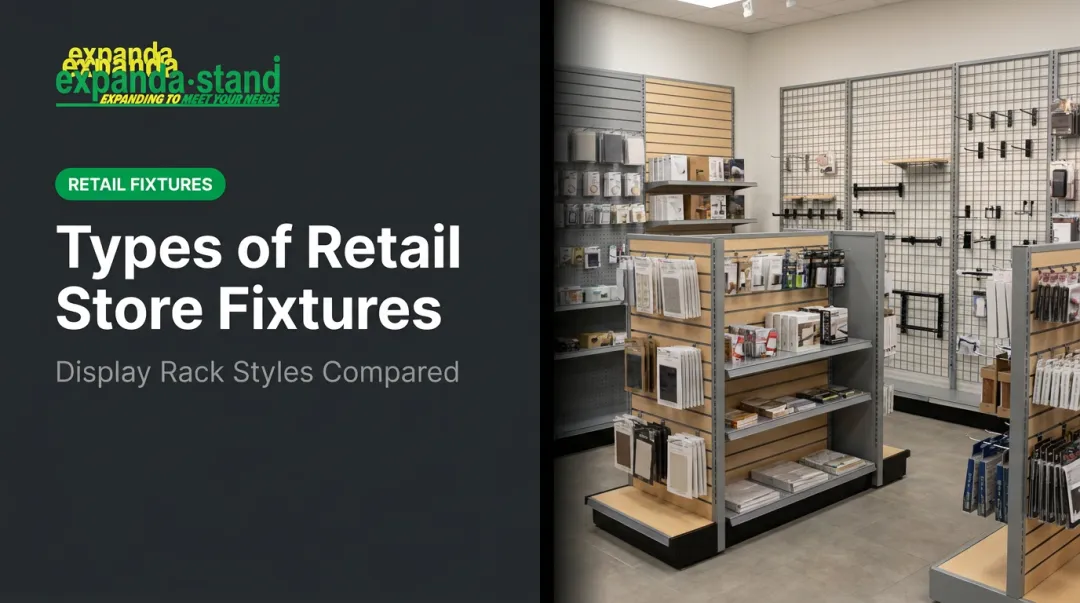
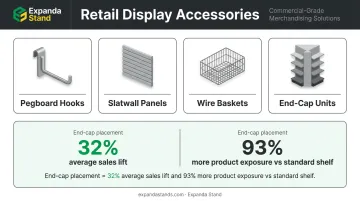
- Pegboard hooks and perforated back panels — for blister-packed items and hanging merchandise
- Slatwall panels — for flexible hook placement and brand display
- Wire baskets and dividers — for loose or fresh produce
- End-cap gondola units — for promotional items at high-traffic aisle ends
Oracle Retail research found that featured items on outer-aisle end-caps generate an average 32% sales lift and approximately 93% more exposure than standard shelf placement. With gondola racks, those end-cap positions can be reconfigured for each new promotion without structural changes.
KPIs most affected: Promotional sell-through rate, time-to-reset for layout changes, labor hours for reconfiguration
When this matters most: Grocers, pharmacies, and convenience stores with high product turnover; retailers managing frequent promotional cycles
Advantage 3: Durability and Long-Term Cost-Effectiveness
Fixture decisions should be evaluated on total cost of ownership across five to ten years — not purchase price alone.
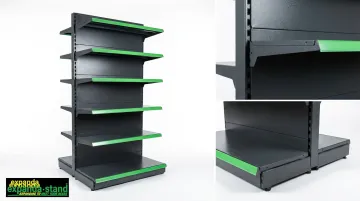
Gondola racks built from powder-coated steel withstand the daily demands of a busy retail environment: constant restocking, customer contact, heavy product loads, and high footfall.
Expanda Stand manufactures its gondola units using in-house sheet metal fabrication — CNC turret punch presses, laser cutting, MIG/TIG welding, and an automated powder coating line — under ISO 9001:2015 certified quality management. That process produces consistent structural integrity across every unit, rather than variability that leads to premature failures.
Key durability features worth specifying:
- Powder-coated steel construction resists rust, scratches, and surface wear in both retail and warehouse-adjacent environments
- Stable T-base design prevents tipping under load and meets standard retail safety requirements
- Modular upright system means a damaged shelf or panel can be replaced individually, without replacing the entire unit
- Tegometall-compatible components ensure parts remain available and interchangeable over the long term
For pharmacies and food retailers, FSSAI Schedule 4 requires food premises surfaces to be smooth and easy to clean. Powder-coated steel gondola shelving meets that requirement and can be cleaned beneath base shelves without specialist equipment — keeping hygiene compliance straightforward.
KPIs most affected: Total fixture cost over five to ten years, maintenance hours, fixture replacement frequency, safety incident rate
When this matters most: High-footfall stores where fixtures face constant wear; pharmacies and food retailers with hygiene obligations; businesses making a long-term infrastructure investment
What Happens When Gondola Racks Are Missing or Ignored
Stores that rely on ad-hoc shelving, fixed wall units only, or low-quality racks face consistent, avoidable problems:
- Fewer products on display — limited floor space utilisation reduces the range available to customers, shrinking basket size and increasing stockout exposure
- Inability to respond to promotions — without reconfigurable shelving, seasonal and supplier-driven display changes require expensive renovations or simply don't happen
- Poor product visibility — inconsistent shelf heights and unstructured layouts reduce customer discovery, particularly in the high-value eye-level zone
- Rising fixture costs — low-durability shelving that bends, rusts, or collapses under load requires repeated replacement, making the "cheaper" option more expensive over time
- Layout rigidity at scale — once a store outgrows fixed shelving, the only option is a costly full overhaul; starting with a modular gondola system sidesteps that disruption entirely
IHL Group estimated global retail losses from out-of-stocks and overstocks at USD 1.73 trillion annually. At the store level, poor shelving directly worsens both problems — products that can't be seen aren't restocked on time, and space that can't be reconfigured leads to overstock buildup in the wrong locations.
How to Get the Most Value from Gondola Racks
Gondola racks deliver their full potential when three conditions are consistently met.
Strategic placement:
- Position high-margin and high-velocity products at eye level — the zone where customers naturally look first
- Use end-cap gondola units for promotional and impulse items near store entrances and checkouts
- Orient double-sided island units to guide customer flow through all store sections, not just the front quarter
Deliberate configuration:
- Match shelf heights and depths to actual product dimensions rather than leaving default settings in place
- Use accessories purposefully — pegboard hooks for hanging products, baskets for loose items, dividers for fresh produce
- Keep shelves fully stocked and faced; sparse shelving signals poor range and reduces purchase confidence
Regular review:
- Revisit planograms periodically to ensure product placement reflects current sales performance
- Adjust configurations when new product categories arrive or promotional priorities change
- Check structural integrity during routine restocking — catches minor issues before they become safety problems
Expanda Stand's gondola systems are built to support all three of these conditions in practice. Tool-free shelf adjustment lets store teams reconfigure shelving without calling in additional support. The modular accessory range covers new merchandising needs without replacing the base fixture — protecting your initial investment as your product mix evolves. For retailers who want layout guidance, Expanda Stand's team offers custom consultation based on specific store formats and product categories.
Conclusion
Gondola racks do more than hold products. They give retailers direct control over space usage, product visibility, promotional flexibility, and infrastructure cost — within a single system.
The three core advantages — space efficiency, merchandising flexibility, and structural durability — compound over time when the right racks are selected, installed correctly, and managed with intention.
A well-configured gondola layout increases the number of products a store can display, makes them easier for customers to find, and reduces total infrastructure cost across the fixture's working life.
Whether you are fitting out a new supermarket, expanding a pharmacy chain, or upgrading a convenience store, the gondola rack system you choose determines how much your store can actually deliver operationally. Reach out to the Expanda Stand team — with over 25 years of experience and 5,000+ retail projects completed — to explore gondola configurations tailored to your store format and space requirements.
Frequently Asked Questions
What is a gondola rack?
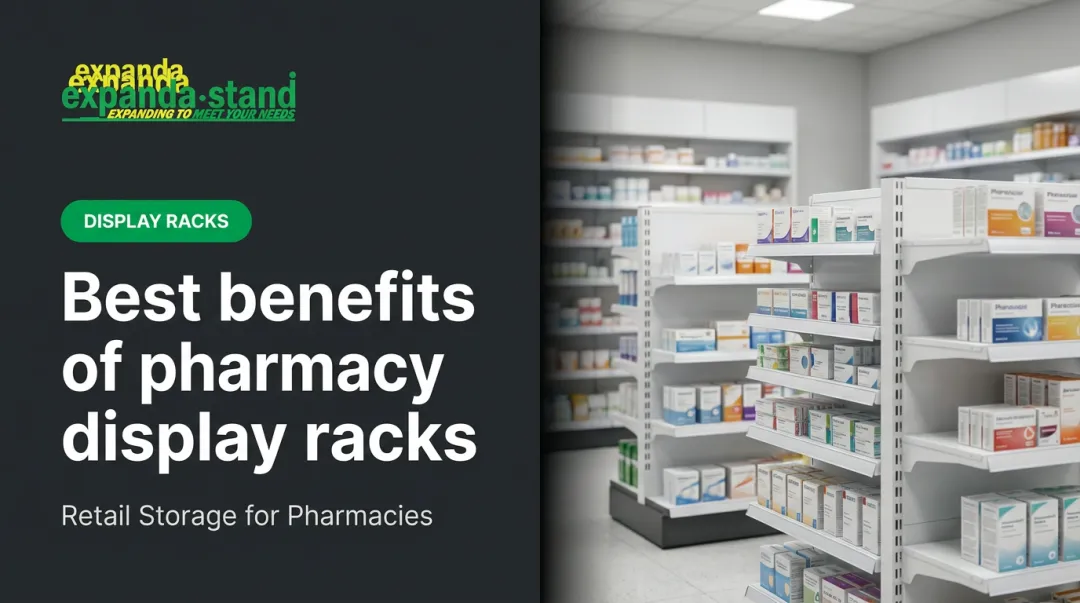
A gondola rack is a freestanding, modular retail shelving unit with adjustable shelves and a stable base. It is available in single-sided (wall-mounted) and double-sided (island) configurations, and is used across virtually all organised retail formats to display and organise merchandise.
What are gondola racks used for today?
Gondola racks organise product aisles in supermarkets, pharmacies, convenience stores, hypermarkets, and hardware stores. They also support promotional displays on end-caps and activate both perimeter wall space and centre-floor space for merchandise display.
What are the key benefits of using gondola racks?
The primary operational benefits are space maximisation, improved product visibility, merchandising flexibility, structural durability, and lower long-term fixture costs compared to fixed or custom-built shelving.
How much weight can gondola shelving hold?
Most commercial gondola shelves handle between 50–150 kg per shelf, depending on the upright gauge and material grade. Light-duty units suit packaged goods; heavy-gauge models are built for hardware or bulk items. Always confirm the rated capacity with your manufacturer for your specific product mix.
What types of stores use gondola racks?
Gondola racks are standard in supermarkets, pharmacies, hypermarkets, convenience stores, hardware stores, and specialty retailers. Any format that needs organised, accessible display across multiple SKUs — from a neighbourhood kirana to a large-format store — can use them effectively.
Are gondola racks easy to reconfigure?
Quality gondola systems support tool-free or minimal-tool assembly, so store staff can adjust shelf heights and swap accessories without calling in a technician. Expanda Stand's gondola units are built with this in mind — shelf positions and accessories can be changed quickly to accommodate seasonal ranges or new product categories.