Choosing display racks is a business infrastructure decision, not a procurement task. The right fixture improves how customers navigate your store, how efficiently your staff restocks, and how much product you can display per square metre of floor space. Getting it wrong compounds quietly — until the numbers force a costly overhaul.
This guide covers the key considerations every retail store owner or manager should work through before committing to a display rack purchase.
Key Takeaways
- 82% of purchase decisions happen inside the store — your display racks are your most consistent sales tool.
- Rack choice should align with store format, product type, load capacity, and traffic flow — not price alone.
- Powder-coated steel delivers the best durability-to-cost ratio for high-traffic retail environments.
- Modular systems allow seasonal resets and range expansions without replacing entire fixtures.
- Total cost of ownership across 5–10 years matters far more than the upfront unit price.
What Are Retail Display Racks and Why Do They Impact Sales?
Display racks are purpose-built fixtures that organize, present, and maximize the visibility of merchandise. The best ones work without any staff involvement: they direct customer attention, extend dwell time, and push purchase decisions at the shelf.
POPAI's 2014 Mass Merchant Shopper Engagement Study, conducted with 2,991 shoppers, found that 82% of purchase decisions were made in-store, with 62% of purchases unplanned. A fixture that improves product visibility or positioning converts more of that in-store intent into actual sales.
Academic research confirms the shelf-level mechanism. Chandon et al. found that doubling shelf facings from 4 to 8 increased brand noting by 28%, re-examination by 35%, and choice by 10%. Display racks determine how many facings your products get — and where on the shelf those facings sit.
Main Categories of Display Racks
| Rack Type | Best For |
|---|---|
| Gondola / Island Shelving | Supermarket and hypermarket aisles |
| Wall-Mounted Racks | Pharmacies, hardware stores, space-constrained retail |
| End-Cap Units | Promotional display, category entry triggers |
| Countertop Displays | Impulse items near billing counters |
| Modular / Freestanding Racks | Flexible layouts, seasonal resets, boutiques |
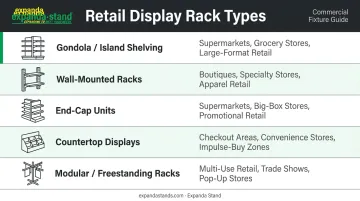
Each rack type solves a different problem. Knowing your store format, footfall patterns, and product mix is what determines which one actually earns its floor space.
Key Considerations When Choosing Display Racks
Display rack selection driven by price alone is one of the most expensive mistakes a retailer can make. Each factor below connects directly to operational and sales outcomes.
Store Format and Traffic Flow
Your store layout determines which rack configurations will actually work. A grid-style supermarket with 500+ SKUs needs a fundamentally different approach than a curated pharmacy or a boutique with 50 products.
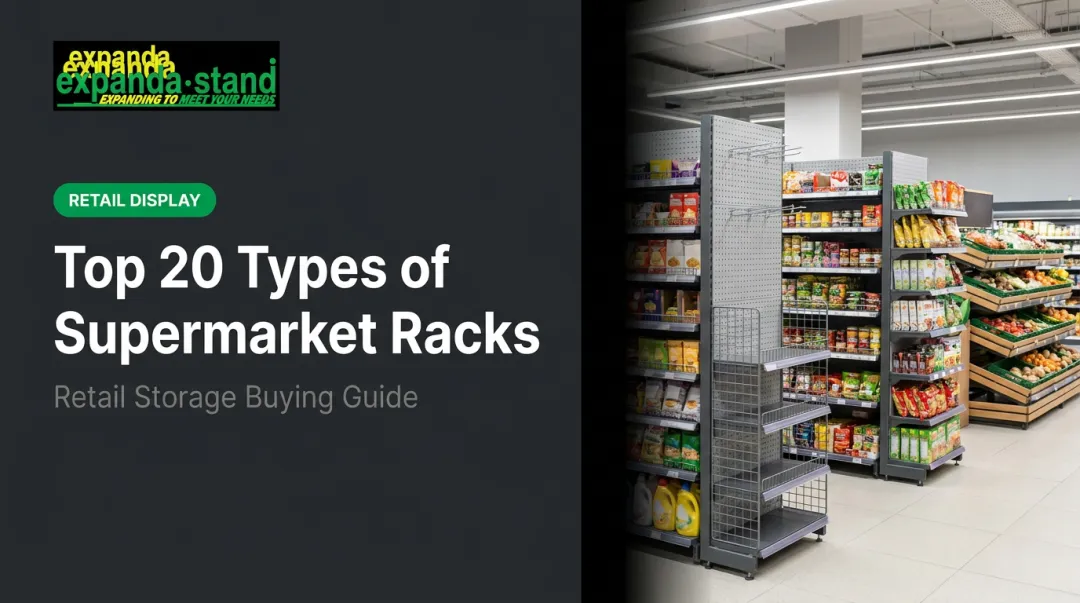
- Grid layouts (supermarkets, pharmacies, hardware stores): Double-sided gondola runs maximize product density in predictable, high-traffic aisles.
- Free-flow layouts (boutiques, specialty retail): Freestanding or wall-mounted fixtures invite slower browsing and suit curated product ranges.
- Hypermarket formats: Combine gondola runs for core categories with end-cap placements for promotions.
Traffic flow logic matters here. A 2022 Journal of Retailing study analyzing 42 weeks of scanner data found that optimized display allocation could increase average store revenue by 11.15%. Front end-caps drove the largest lift in category purchase incidence; shelf displays drove brand choice. That distinction should shape where you place each rack type, not just how many you install.
Product Category and Weight Requirements
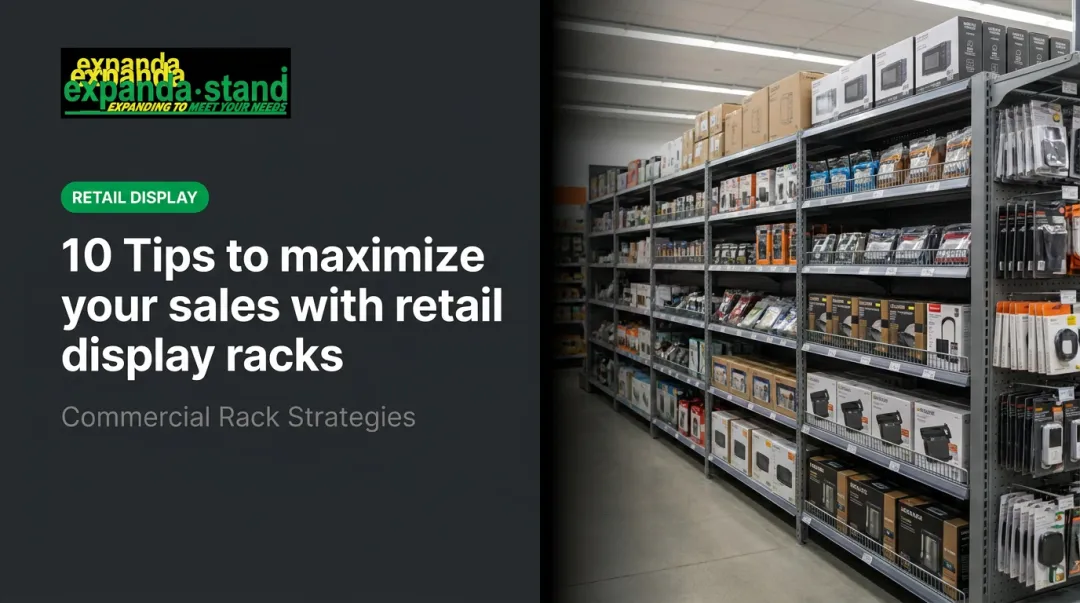
Product type dictates rack structure. Heavy packaged goods — detergents, canned food, oil cans, rice bags — demand steel shelves with verified load ratings. Apparel, accessories, and blister-packed pharmaceuticals need hanging systems or pegboard configurations. Using the wrong rack leads to shelf bowing, safety failures, or a presentation that undermines the product's perceived value.
Load capacity varies significantly based on steel gauge, shelf depth, and bracket type. Published benchmarks from international suppliers range from 40–80 kg per shelf for standard gondola configurations to 227 kg per shelf for heavy-duty wall display units.
Always request written load ratings per shelf — not verbal estimates. Improperly loaded or under-specified fixtures have caused serious injuries in documented incidents, and written specifications are the minimum due diligence for safety compliance.
Space Utilization and Aisle Planning
Floor space is a premium asset in retail. The goal is to maximize vertical selling space without obstructing customer movement — a balance that directly affects both shopper comfort and units displayed per square metre.
Key planning considerations:
- Minimum aisle clearance: India's Model Building Bye-Laws 2016 specify a minimum corridor width of 1.5 m for most commercial buildings. Confirm local building and fire approval requirements before finalizing rack layouts.
- Shelf height: Research supports placing priority SKUs at higher and central shelf positions rather than bottom shelves, where attention and choice rates drop measurably.
- Wall-mounted systems: For smaller stores — kirana-adjacent formats, urban pharmacies, compact hardware outlets — wall racks free up floor space while maintaining product density.
Material and Build Quality
Rack material affects durability, maintenance frequency, and how the store is perceived by customers. The cheapest option rarely delivers the lowest total cost.
| Material | Best For | Key Consideration |
|---|---|---|
| Powder-coated steel | High-traffic supermarkets, hypermarkets, hardware stores | Corrosion-resistant, durable under load, long service life |
| Laminated MDF / Wood | Pharmacy counters, boutique billing areas | Professional finish, not suited for heavy loads or wet environments |
| Wood + Stainless Steel | Fresh produce displays | Combines aesthetic warmth with hygiene and moisture resistance |
| Acrylic | Cosmetics, countertop accessories | Lightweight, high visibility — not for load-bearing applications |
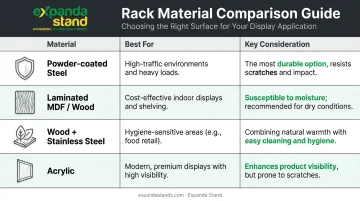
The Powder Coating Institute notes that powder coatings are engineered for resistance to corrosion, UV damage, and physical wear — extending product life and reducing recoating requirements. For high-traffic Indian retail environments, powder-coated steel remains the most practical default.
When evaluating suppliers, ISO 9001:2015 certification is a useful screening criterion — it indicates documented quality management processes, not just a manufacturer's claims. It does not certify load capacity, so ask for product-specific load tests and material specifications separately.
Modularity and Flexibility for Future Changes
Retail stores undergo seasonal resets, promotional campaigns, and range expansions. A rack system that cannot be reconfigured forces expensive replacement rather than simple rearrangement.
- Standard off-the-shelf racks suit stable, well-defined product lines where format and range are unlikely to change.
- Modular systems — with tool-free assembly, adjustable shelf pitches (such as 50mm pitch spacing), and Tegometall-compatible accessories — allow retailers to reposition shelves, add hooks, or change configurations without replacing entire units.
For stores expecting range growth or seasonal merchandising changes, modular systems pay for themselves over a 3–5 year horizon through avoided replacement and reconfiguration costs.
Budget and Total Cost of Ownership
The purchase price of a display rack is only the starting point. True cost includes installation, maintenance, replacement frequency, and compatibility with future inventory changes.
Indian supplier listings give a rough indication of entry-level pricing:
- Wall-mounted racks: approximately ₹2,500–₹5,000 per unit
- Standard gondola/double-sided display racks: approximately ₹4,500–₹12,000 per bay
- Mild steel freestanding display racks: approximately ₹8,500–₹10,500
Actual cost depends on steel gauge, load rating, finish quality, and supplier — these are benchmarks, not standards. Before finalizing any purchase, build a simple TCO comparison: landed price plus installation, load rating adequacy, finish durability, warranty, and estimated replacement cycle.
Common Mistakes Retailers Make When Selecting Display Racks
Fixture purchasing errors tend to cluster around the same predictable blind spots — and the cost shows up quickly once the store is operational.
Visual appeal over functional fit is the most common trap. Attractive racks that don't align with product weight, customer flow, or restocking ease create ongoing friction. A rack that looks good in a showroom but requires two staff members to restock safely — or bows under normal product load — becomes an operational liability within months.
Overlooking scalability is the second recurring mistake. Retailers who buy fixed, non-modular racks for a growing store often face a complete fixture overhaul within 2–3 years as inventory expands or store layouts shift. Accounting for range and format changes during the initial purchase — by selecting modular systems — avoids that cycle entirely.
Skipping supplier evaluation compounds both problems above. Buying from unverified manufacturers increases the risk of:
- Substandard load ratings that don't match published claims
- Surface finishes that degrade quickly under daily retail conditions
- No spare parts availability when shelves need replacement
- Poor after-sales support when installation problems arise
Before committing, check for ISO certifications, documented quality management systems, and a proven track record of supplying stores similar to yours. Any supplier unable to provide written load specifications should be disqualified — regardless of price.
How Expanda Stand Can Help You Choose the Right Display Racks
Expanda Stand has been manufacturing display racks and retail store fixtures since 1999 — supplying over 5,000 retail customers across India, the USA, and Australia. Their product range covers formats from supermarkets and hypermarkets to pharmacies, hardware stores, and specialty retail, which means the recommendations they offer are based on direct experience with genuinely different store environments.
Their ISO 9001:2015 certification and in-house sheet metal fabrication capability mean that retailers get fixtures built to documented quality standards — with consistent material specifications, quality controls, and on-time delivery backed by lean manufacturing processes. Unlike catalogue suppliers or discount-market options, every specification is documented and after-sales support is structured — not verbal and variable.
What sets Expanda Stand apart:
- Custom rack design tailored to specific store layout, product category, and load requirements
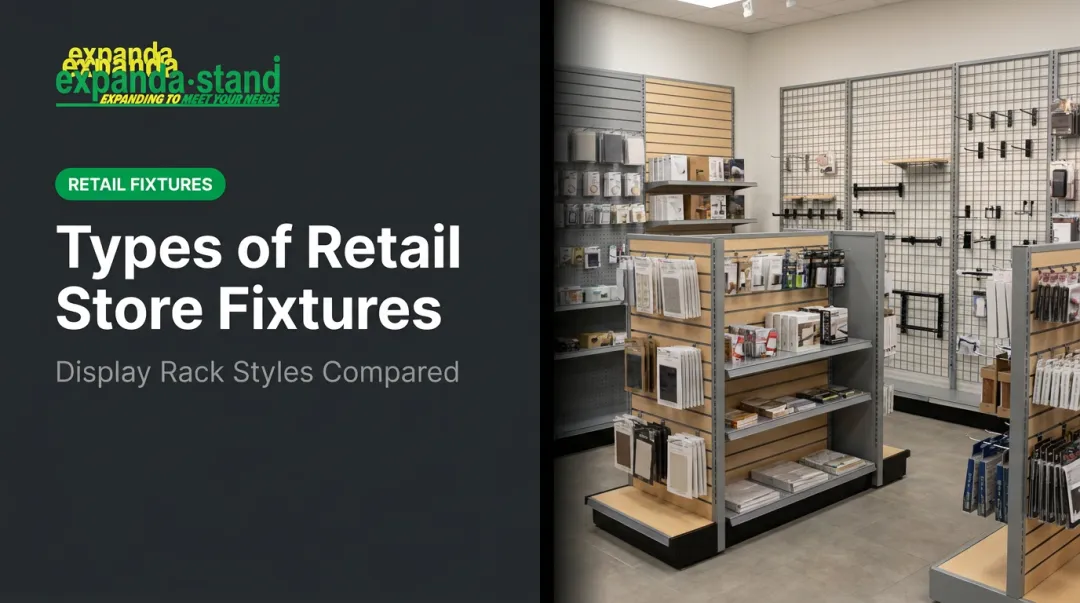
- Modular systems including Tegometall-compatible gondola shelving, wall-mounted displays, pegboard racks, and slat wall configurations — all supporting post-installation reconfiguration
- End-to-end project support covering consultation, design, fabrication, and professional installation
- Supports growth from a single store to multi-outlet chains, maintaining consistent fixture standards across every location
- 7 industry awards reflecting a track record of manufacturing excellence
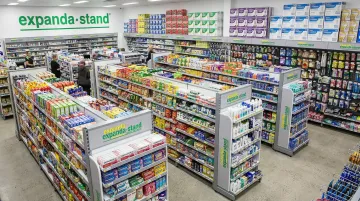
For pharmacies specifically, Expanda Stand manufactures dedicated display units including premium glass-shelf cabinets with toughened glass shelving and integrated branding capability — a level of product specificity that generic suppliers don't offer.
To discuss your store layout, product range, or custom rack requirements, contact Expanda Stand at sales@expandastands.com or +91-44-26880800.
Conclusion
A display rack purchase is a long-term business decision. The right fixture improves product visibility, supports customer movement, and directly lifts sales per square metre. The wrong one quietly compounds costs: more frequent replacements, safety incidents, restocking delays, and missed revenue.
The best rack isn't the most popular option or the cheapest one available. It's the one that fits your specific situation. Revisit the decision every 2–3 years, or whenever your store undergoes:
- A product range expansion
- A format or layout reset
- A significant footfall or customer demographic shift
Start with your store's specific requirements. Then find a manufacturer who can back their recommendations with load capacity data, material certifications, and dimensional drawings — not just a catalogue price.
Frequently Asked Questions
How do you display items effectively in a retail store?
Match rack type to product category, place high-demand and high-margin items at eye level, and organize by category or buying intent to guide natural customer flow. Clear signage and consistent product grouping reduce browsing friction and improve conversion.
What are the different types of racks in retail stores?
The main categories include:
- Gondola shelving — standard supermarket and grocery aisles
- Wall-mounted racks — vertical space optimization along perimeter walls
- End-cap units — promotional displays at aisle ends
- Countertop racks — impulse items near checkout
- Freestanding or modular racks — flexible placement for seasonal or rotating inventory
What are the retail display standards in India?
India follows the National Building Code and local building bye-laws for mercantile spaces. These cover minimum corridor widths (1.5 m per the Model Building Bye-Laws 2016) and fire safety compliance. There is no dedicated BIS standard for retail gondola load ratings — written load specifications from the manufacturer remain the primary verification tool.
What material is best for retail display racks?
Powder-coated steel is the most durable and cost-effective choice for high-traffic retail environments. Wood or MDF suits boutique counters and pharmacy billing areas. Stainless steel works for fresh produce displays. Acrylic is suited for lightweight countertop or cosmetics applications only.
How do I choose the right display rack for a small retail store?
Small stores benefit most from wall-mounted systems that preserve floor space, compact gondola units for aisle products, and countertop racks near checkout. Choose modular options so the layout can adapt as inventory grows without replacing entire fixtures.
Can display racks be customized for specific store layouts?
Yes. Custom display racks are advisable when a store has non-standard dimensions, a specialized product range, or brand aesthetic requirements that standard catalogue sizes cannot meet. Manufacturers like Expanda Stand offer custom fabrication that also allows load ratings to be matched to specific product categories from the outset.